Not every ugly pool liner needs replacement. Learn how to separate stains, fading, buildup, tears, and real damage.

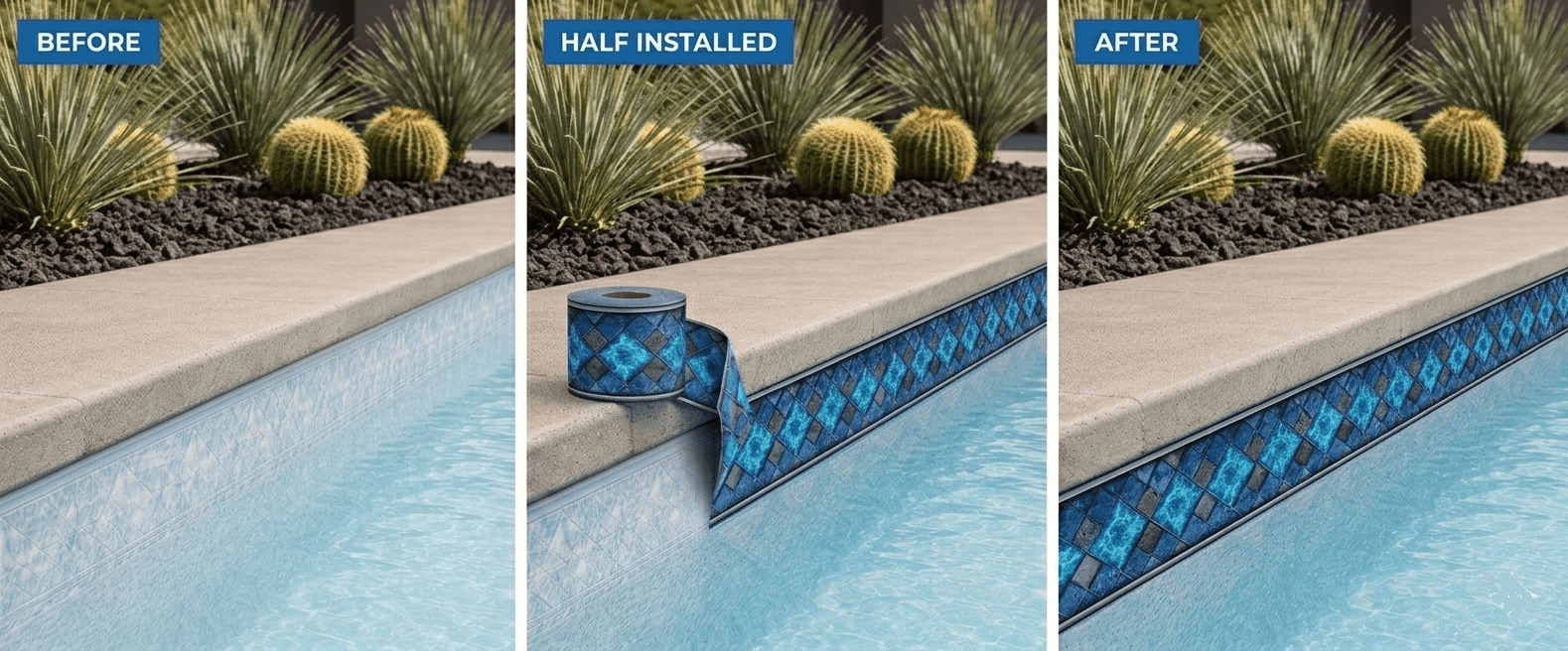
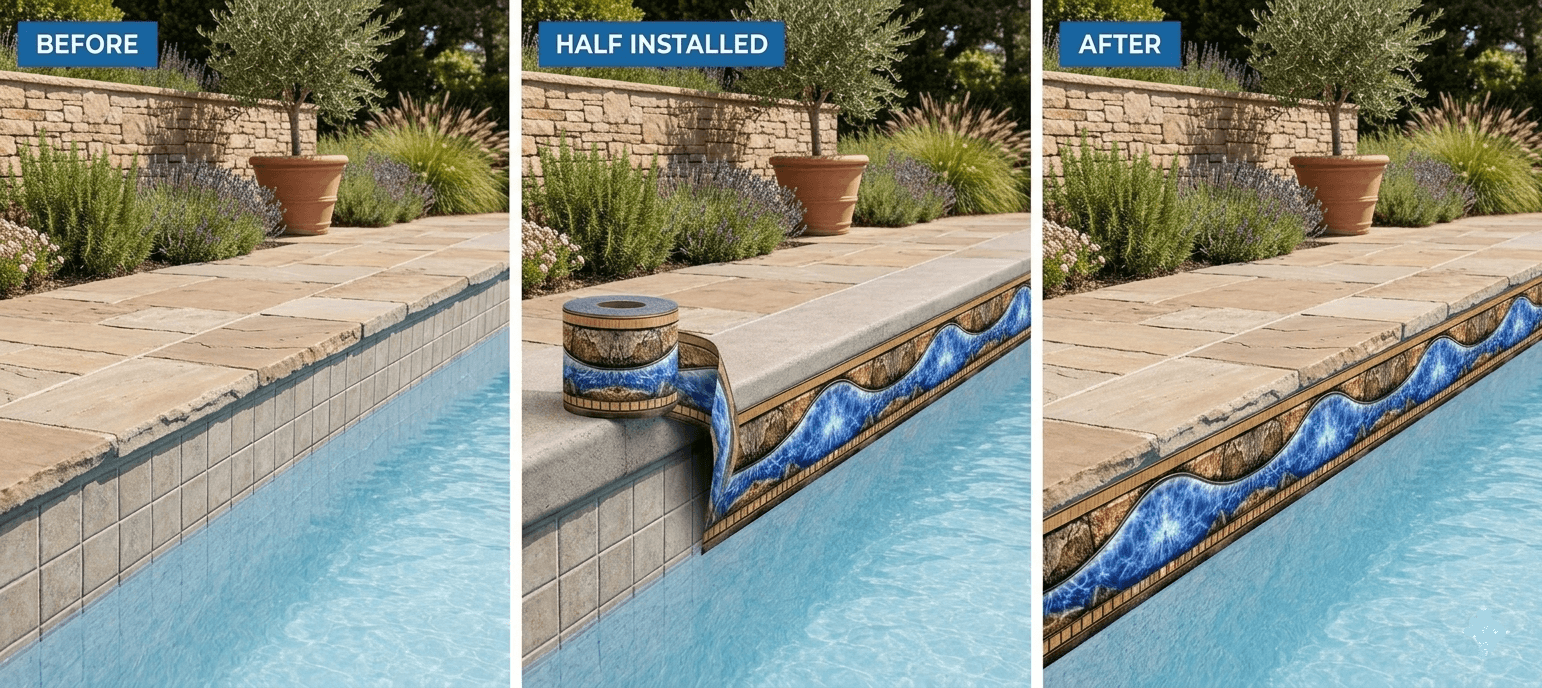
A stained pool liner and a damaged pool liner are not the same problem. That distinction matters because one may need cleaning, one may need repair, one may need replacement, and one may simply need a better-looking border. Before you spend money, slow down and identify what you are actually seeing.
Stains: ugly, but not always urgent
Stains can come from organic debris, minerals, metals, waterline residue, or years of ordinary use. They may look dramatic but still be mostly cosmetic. If the vinyl is flexible and the pool holds water, staining alone does not automatically mean you need a new liner.
Fading: the classic border problem
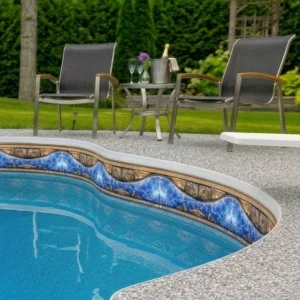
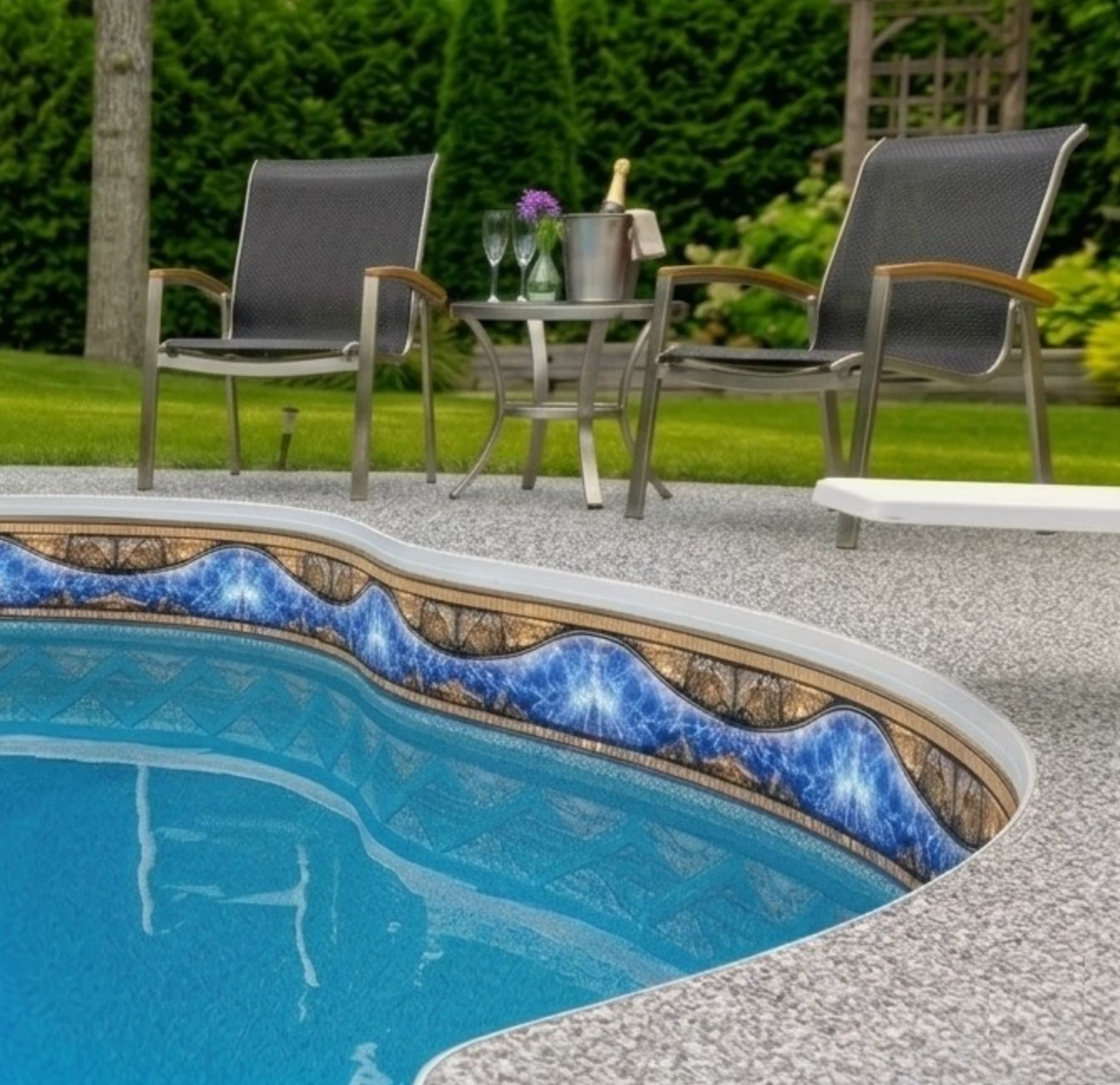
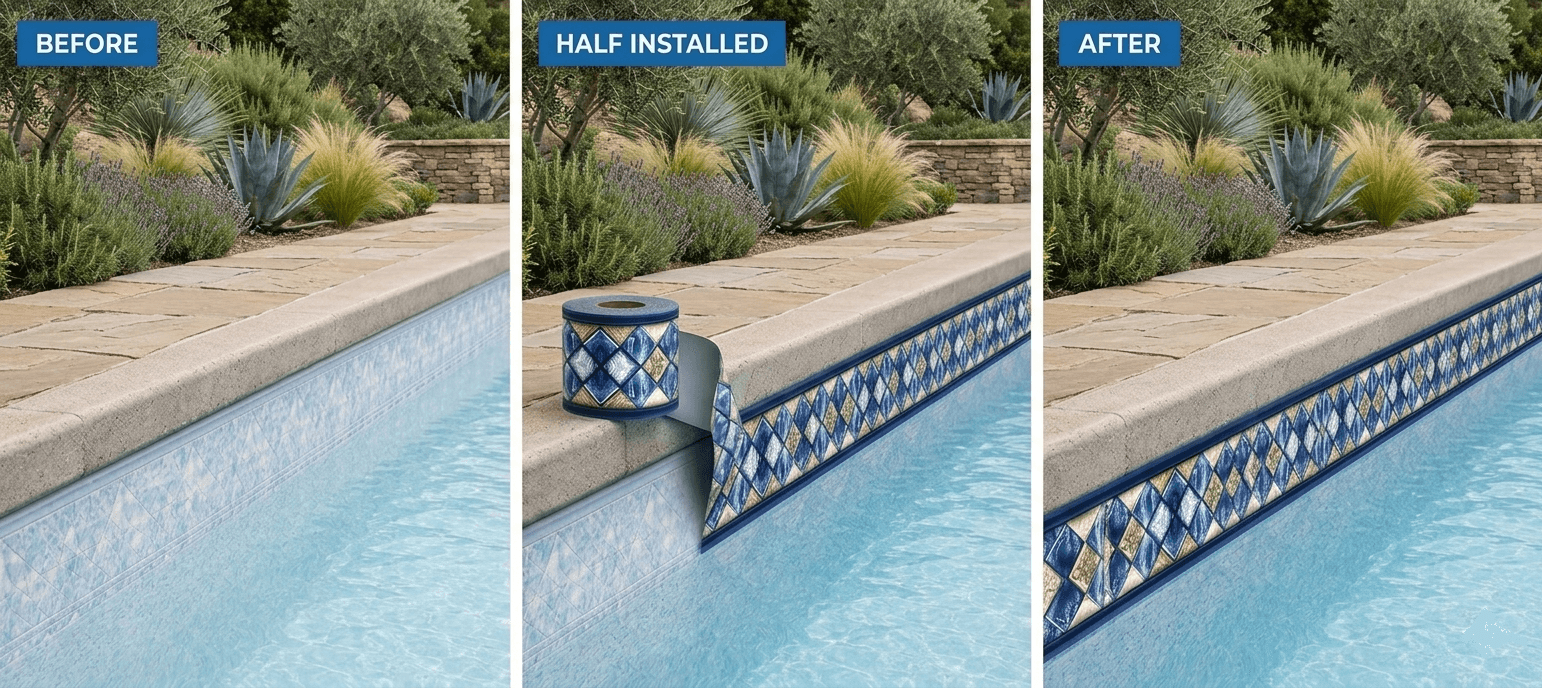
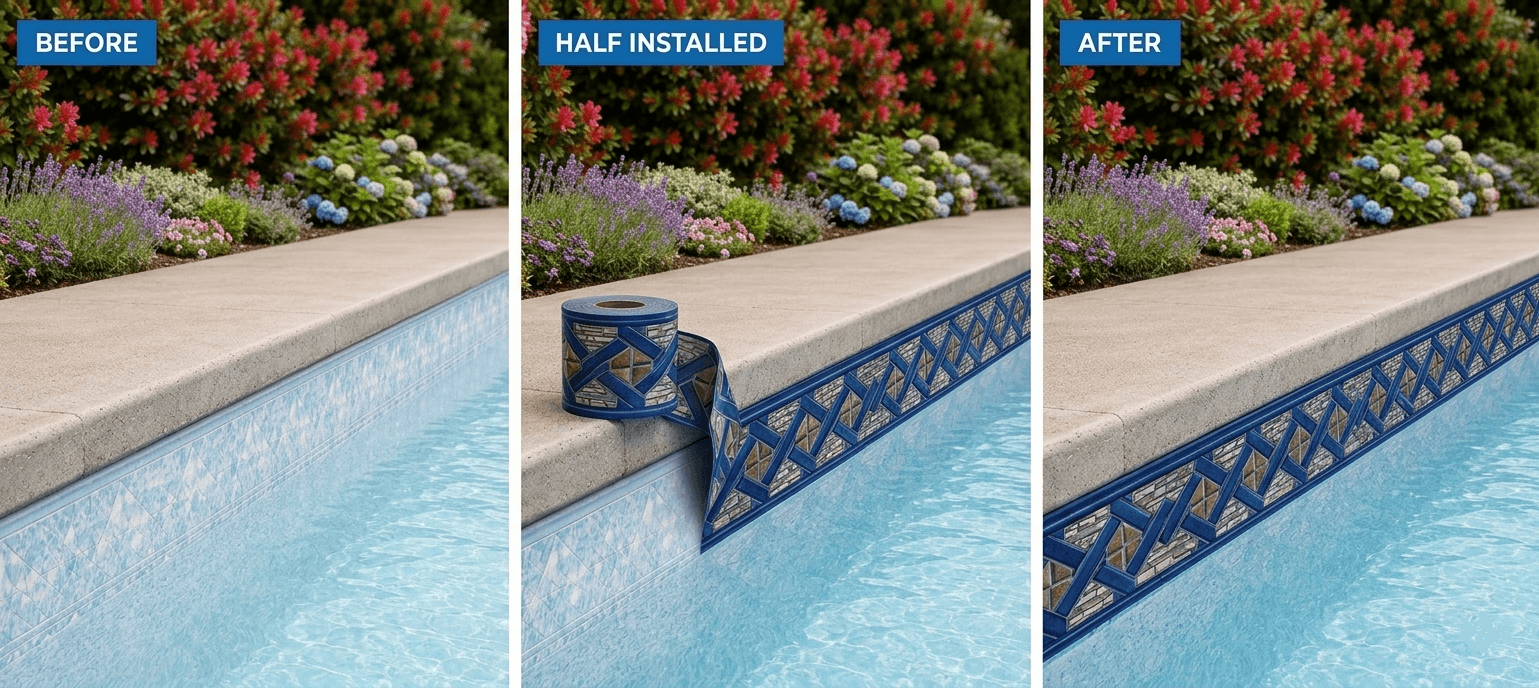
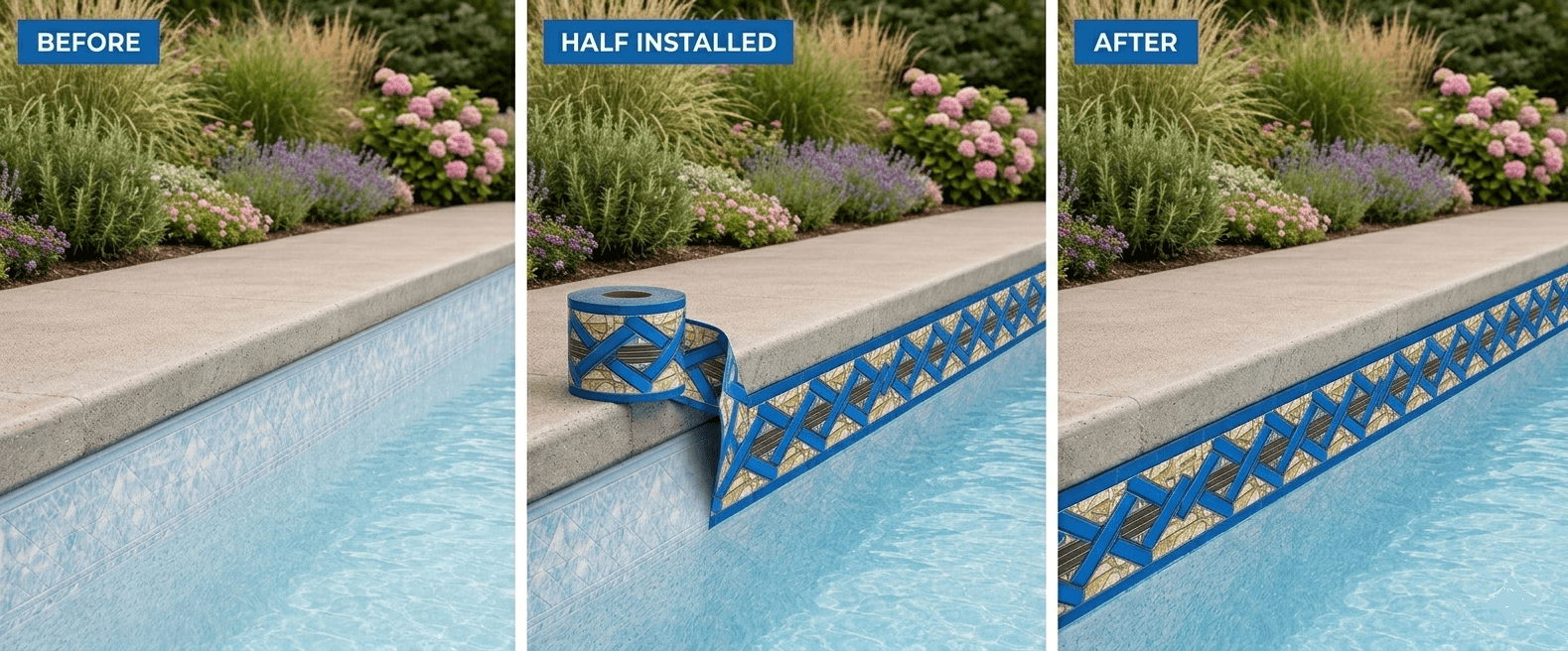
Fading is common near the top of the liner. It may appear as a washed-out band where the pattern used to be richer. This is one of the situations where an adhesive pool border can make sense, especially when the lower liner still looks good.
Damage: the category to take seriously
Damage includes tears, punctures, brittleness, pulling away, major wrinkles, or leaks. If the liner is losing water or no longer feels durable, do not treat it as a cosmetic issue. Get a pool professional involved.
| What you see | Likely category | Best next step |
|---|---|---|
| Brown or green marks | Possible organic stain | Clean and test water |
| White/gray crust at waterline | Possible mineral scale | Use vinyl-safe cleaning method |
| Washed-out top border | Fading | Consider border refresh |
| Small puncture | Damage | Repair properly |
| Brittle, cracking vinyl | Material failure | Consider replacement |
Why water care still matters
Good water habits can reduce headaches. The CDC recommends maintaining appropriate pH and disinfectant levels for safe swimming, and those routines also help pool owners avoid unnecessary mystery problems. Review the CDC’s pool care basics if you are unsure where to start.
Where Rhino fits in the decision
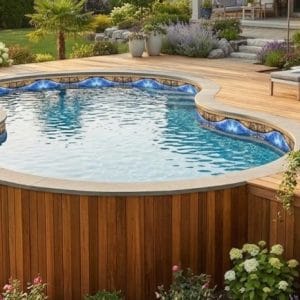
Rhino belongs in the “cosmetic refresh” lane. It is not a substitute for leak repair. But if your issue is a stained, faded, or dated border, a Rhino Pool Border may help you avoid replacing an otherwise serviceable liner just to improve appearance.
A practical inspection routine
Look at the pool in daylight. Check the waterline, corners, steps, and seams. Touch the vinyl gently where possible. Look for water loss. Then decide whether the issue is cleaning, repair, replacement, or refresh. This simple sorting process prevents panic spending.
Frequently Asked Questions
Are pool liner stains dangerous?
Not necessarily. Some stains are cosmetic, but they can also signal water balance or maintenance issues.
How do I know if my liner is damaged?
Leaks, tears, brittleness, cracking, and major pulling are stronger signs of damage than discoloration alone.
Can an adhesive border cover stains?
It can cover the visible border area when the surface is appropriate, but it should not be used to ignore structural damage.
Diagnose before you replace.
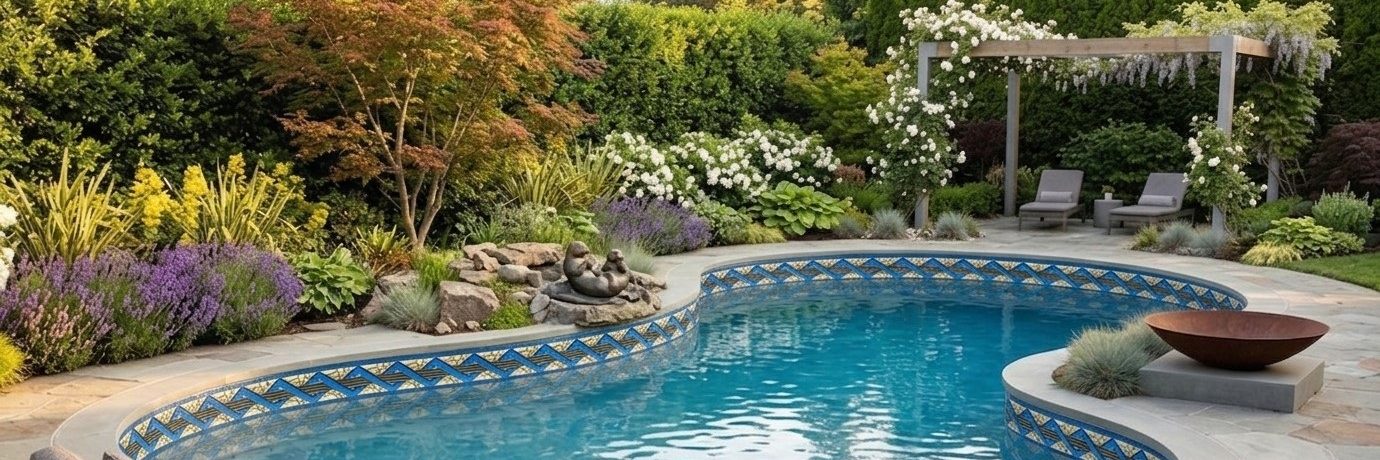
If your pool liner still holds water but the border looks faded, dated, or tired, take a look at Rhino Pool Borders. It is a peel-and-stick vinyl pool border designed to help homeowners refresh the visible edge of the liner without jumping straight to full liner replacement.
Measure your pool perimeter, explore the available designs, or visit the FAQ page before you order.